

Breaking Down Silos: Tackling Bottlenecks in Cross-functional Collaboration in Market Access
- jgao177
- Aug 8, 2025
- 3 min read
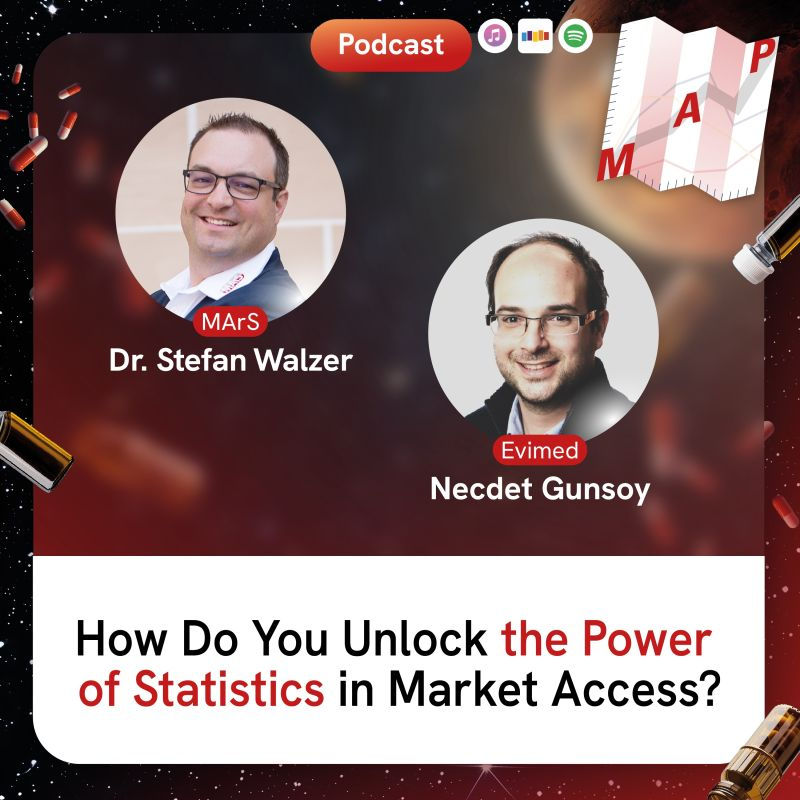
In a recent episode of The Market Access Podcast, Evimed’s Director, Necdet Gunsoy, shared his perspective on one of the most persistent challenges in the life sciences industry: how to get statistics, market access, HEOR, and real-world evidence teams to work together effectively.
Having worked across all these disciplines, from technical statistical roles to senior strategic positions, Necdet has seen firsthand where collaboration succeeds, where it breaks down, and how to bridge the gap.
Listen to the full podcast here: https://map-market-access.captivate.fm/
Common Challenges and Bottlenecks in Cross-functional Collaboration
Statistics and Market Access share a common goal: to generate robust, credible evidence to support pricing, reimbursement, and market entry. However, teams often face practical challenges when working together:
Different languages: Market Access communicates in value messages and HTA submissions, while statisticians focus on analysis plans, endpoints, and methodology.
Misaligned priorities: What Market Access needs urgently may not align with the statistician’s workflow and resource availability.
Data access bottlenecks: Accessing the right data at the right time isn’t always straightforward.
Translation gaps: Aligning clinical data with value narratives can be complex, leading to disconnects in evidence planning.
These challenges can create bottlenecks, resulting in last-minute requests, delays, and inefficiencies that impact timelines and deliverables.


Insights for Smoother Cross-Functional Collaboration
From the conversation in the podcast, several practical advice emerged:
Plan early and anticipate needs: Identify evidence requirements well ahead of submission timelines. Pre-specify as much as possible for economic models and indirect treatment comparisons.
Prioritise what’s truly critical: Distinguish between analyses essential for strategic decision-making, such as subgroup efficacy, and those that can wait, like supplementary safety tables.
Limit initial requests to critical outputs: Narrowing down to a manageable number of key tables (e.g., about 50) allows statisticians to focus their efforts and deliver results faster, avoiding confusion and inefficiencies from overly broad or urgent requests.
Establish flexible processes: Analysis plans should allow for conditional execution, where some analyses are done only if certain criteria are met. This flexibility often requires updating internal policies or SOPs to enable prioritisation and efficient resource allocation.
Communicate with purpose: When engaging external experts, such as payers, KOLs, or physicians, tailor questions to the specific insights you need. Avoid overloading them with technical details that don’t serve the discussion.
Encourage adaptability and clear communication: All teams must be willing to adjust and communicate openly about priorities to navigate competing demands effectively and ensure timely delivery.
The AI Opportunity
AI is already making an impact, especially in real-world evidence where data is structured and programmatic. Automating patient selection, coding, and certain standard analyses offers quick wins.
Adoption in statistics will be slower due to the need for methodological control and trust in outputs. However, for market access and HEOR, AI can already support research, evidence planning, and aspects of modelling and medical writing.
Evimed’s Role


Evimed’s team brings hands-on pharma experience combined with expertise in HEOR and market access. Because we understand the usual bottlenecks that slow down collaboration, whether it is data access issues, misaligned priorities, or communication gaps, we know exactly where to step in.
We specialise in streamlining processes and aligning cross-functional teams. This helps companies navigate complexities more efficiently and deliver results faster.
At the heart of Evimed’s mission is a simple but powerful goal: deliver streamlined solutions to enable patients faster access to innovative medicines. By breaking down silos between statistics, HEOR, real-world evidence, and market access teams, we enable more effective evidence generation and quicker market access decisions. Ultimately, this benefits patients in need of innovative therapies.


Comments